
Ireland's Vanishing Grocery Pubs
There was a time when walking into an Irish pub did not necessarily mean walking into a business that only sold drink. In towns and villages across Ireland, the local pub might also have been a grocery shop, general merchant, hardware shop or even an undertaker. These businesses were once a familiar part of everyday life, particularly in rural Ireland, but today the traditional grocery pub is becoming increasingly rare.
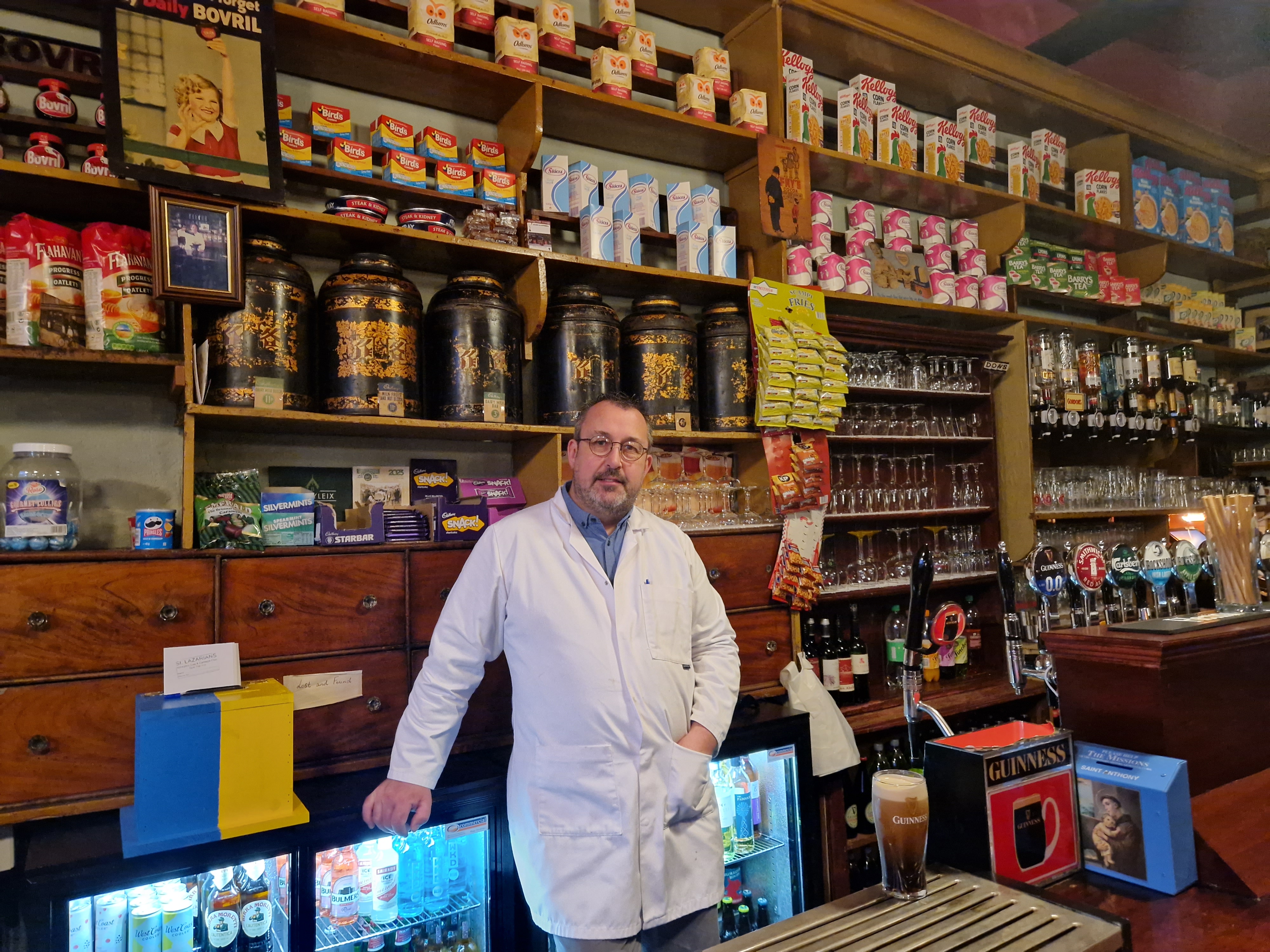
I was reminded of this recently when I visited Morrissey's in Abbeyleix, County Laois. I took the photograph above while I was there, and it is difficult to think of a better surviving example of the traditional Irish grocery pub. It is one of those places where you can spend as much time looking around the room as you can sitting at the counter.
Morrissey's has its origins in a grocery business established by the Morrissey family in Abbeyleix in 1775. Over the years the business was far more than simply a pub. At various times the family were involved in groceries, undertaking, baking and other trades, reflecting a time when one premises could perform several different roles within a town.
The building we see today dates largely from the late nineteenth century, and remarkably, much of the old grocery and pub interior survives. Behind the counter are tall timber shelves that once carried the everyday goods people came in to buy. Old advertising, shop fittings, scales, tins, jars and other objects remain around the premises. They are not reproductions put there to create an old Irish pub atmosphere. They are remnants of the business that actually operated there. That is what makes a place like Morrissey's so interesting to me. Its character was never really designed. It accumulated.
When the Pub Was Also the Shop
The grocery pub made perfect sense in an Ireland of small towns and villages. A community could not always support separate businesses for everything people needed, so families often combined several trades under one roof. Groceries could be sold from one part of the counter while drink was served from another, and the same premises might remain in the same family for generations.
Over time these businesses developed interiors unlike anything that would be deliberately designed today. Shelves were added when they were needed, counters became worn from use, advertising signs were hung wherever there happened to be room and objects simply accumulated. There was no attempt to make the place look old or authentic. It was simply a working business. Ironically, that is exactly what gives the surviving examples so much character today.
The Things That Were Never Meant to Be Decoration
One of the things I have always found fascinating about old pubs and shops is how ordinary working objects eventually become part of the character of the place. An old weighing scales was not originally there because somebody thought it looked attractive. It was there because groceries had to be weighed. Timber drawers and shelving were there because goods had to be stored. Advertising mirrors and enamel signs were supplied to promote products. Counters became polished because thousands of hands and elbows rested on them over many decades.
When enough of those things survive together, they tell the history of the building in a way that a newly decorated interior never quite can. Morrissey's is particularly special in that respect. When you stand inside and look at the old shelving, counters and advertising, you are not looking at somebody's interpretation of what an old Irish grocery pub should look like. You are looking at the real thing.
More Than Somewhere to Have a Pint
The grocery pub also tells us something about the role these businesses once played within Irish communities. They were not simply places to drink. People came through the door to buy household goods, conduct business, hear local news and meet neighbours. The person behind the counter often knew virtually everybody who walked in.
In many places the pub, shop and social meeting place were effectively the same thing. That is part of the reason these old premises have such a strong sense of place. Their character came not only from the fittings and objects inside them, but from generations of people using the same building as part of their everyday lives.
Why Are They Disappearing?
The way we shop has changed enormously. Supermarkets, larger retailers and changing patterns of life gradually made the traditional grocery pub less practical. In many cases the grocery side disappeared and the pub remained. Elsewhere the entire business eventually closed.
Sometimes the evidence of what a premises once was can still be found if you know what to look for. An unusual arrangement of shelving, a bank of old drawers or a section of counter may be the last indication that groceries were once being weighed and sold in the same room where somebody was ordering a pint.
Unfortunately, when these old businesses close, their interiors can disappear remarkably quickly. Counters are removed, shelving is stripped out and signs, mirrors and fittings that survived in one place for generations become scattered or discarded.
Having spent many years dealing in old Irish pub and shop fittings, I have seen how easily that can happen. Often it is not the most valuable object that tells the most interesting story. A battered sign, an old till drawer, a weighing scales or a piece of worn shelving can tell you far more about how a business actually operated than something that has spent its life carefully preserved. The wear is part of the history.
A Piece of Ireland Worth Keeping
Thankfully, places like Morrissey's still give us the opportunity to experience the grocery pub as something more than an old photograph or a reconstructed interior. Visiting recently reminded me just how important these surviving places are. You can look around Morrissey's and see layers of Irish commercial and social history still sitting exactly where they belong. The shelves, counters, advertising and everyday objects all make sense because they remain in the surroundings in which they were originally used.
We often talk about preserving important buildings, but sometimes it is the ordinary interiors and everyday objects inside them that tell us the most about how people actually lived. Ireland's old grocery pubs are a perfect example. There are fewer of them with every passing generation, which makes the ones that remain all the more worth appreciating.


