
Why the Best Irish Pubs Get Better With Age
I was down in Dingle recently and, as I usually do when I'm somewhere with a few good old pubs, I found myself spending probably as much time looking around the interiors as I did at what was in my glass.
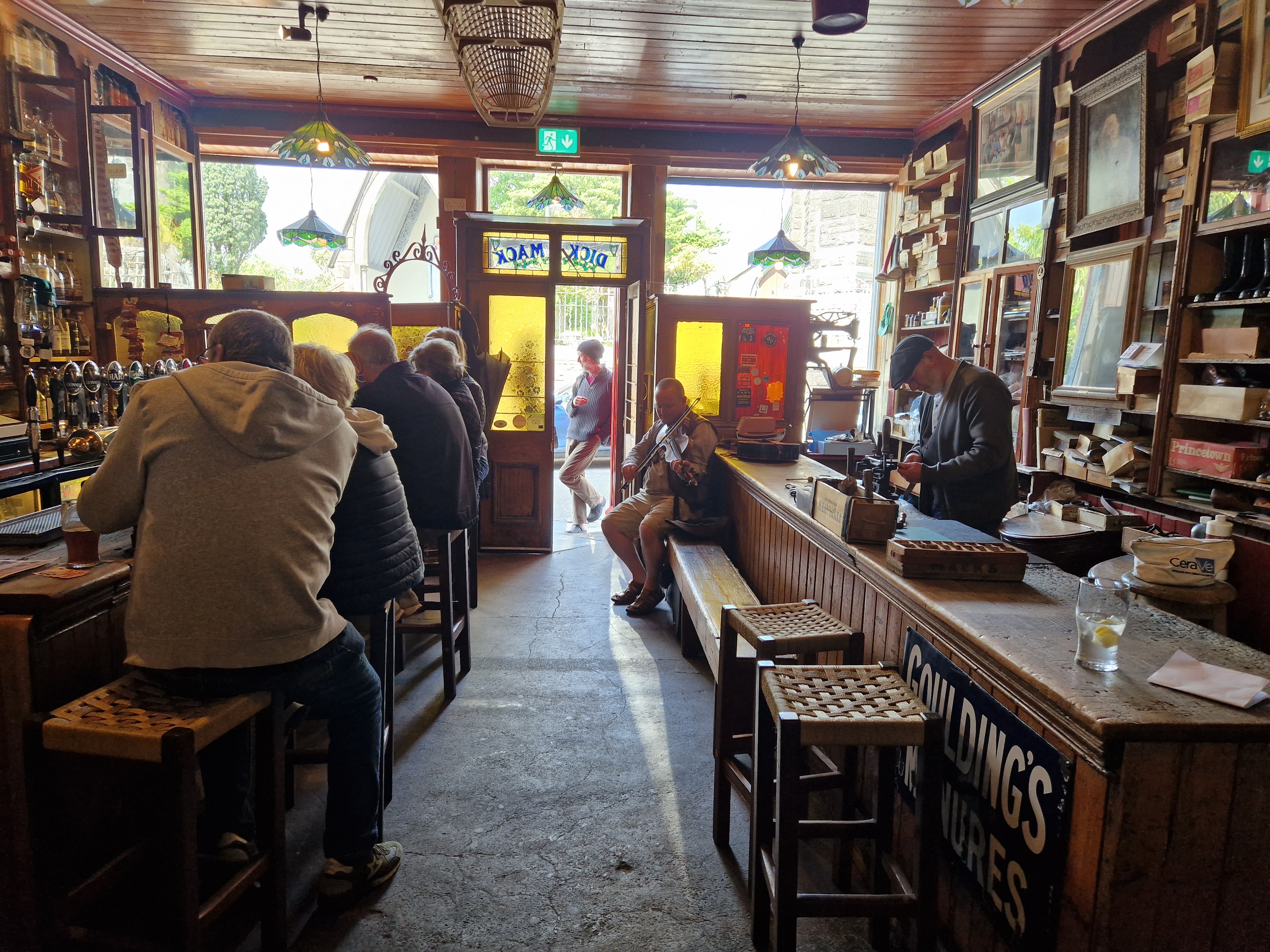
Dingle is particularly good for this. There are pubs there that have changed remarkably little over the years, and walking into places like Dick Mack's reminds you just how much character a pub can accumulate over generations. I took the photograph above while I was there, and Dick Mack's, along with some of the other great old pubs around Dingle, was really the inspiration for writing this.
I've spent more than twenty years buying and selling old Irish advertising, pub fittings, mirrors, signs and other pieces connected with Irish social history, and pubs like these are places I always find myself studying. I'm looking at what is behind the bar, what's hanging on the walls, the mixture of different periods and why things that shouldn't necessarily work together somehow do.
That understanding is also a big part of what I do when helping to put together interiors for pubs. You obviously can't manufacture a hundred years of history, but you can learn from the places that have it. The old pubs of Dingle are a great example of what we're trying to achieve when selecting pieces for a new pub or refreshing an existing one. The aim isn't to make everything match or to make a room look newly decorated. It's to understand why these old interiors work and choose a mixture of pieces that gives the room some of that same warmth, interest and character from the beginning.
A Pub Is Never Really Finished
One of the things I noticed again while visiting the pubs around Dingle is that very few genuinely old Irish pubs look as though everything arrived at the same time. They evolved gradually, with different things being added, moved around and sometimes simply left where they were. Dick Mack's is a great example. Its history is still visible throughout the building, with old shop fittings, bottles, advertising, photographs and objects from different periods all sitting comfortably together. Nothing feels too coordinated, yet somehow everything belongs.
You see the same thing in old pubs all over Ireland. A brewery mirror might have been installed behind the bar decades before a later Guinness sign. Photographs appeared on the walls, somebody brought in a clock, furniture changed and advertisements went up and were never taken down. Individually, none of these things necessarily makes a pub special, but together they create layers and begin to tell the story of the place.
For me, understanding those layers is the key. When we're selecting a collection for a pub today, the pieces might all be going into the room at roughly the same time, but that doesn't mean they should all look as though they came from the same time. Mixing different periods, subjects, materials and types of objects is one of the best ways of creating a room that feels established rather than newly decorated.
Choosing the Right Pieces
After more than twenty years working with this material, I've developed a fairly strong instinct for what works together in a pub. A lot of that has come from spending time in places like Dick Mack's and countless other old pubs around Ireland and looking closely at how their interiors have evolved.
An old whiskey mirror on its own is an antique, but put it behind a bar alongside an old photograph, some vintage brewery advertising, Irish prints and traditional signage and suddenly it becomes part of something bigger. The important thing is that the pieces don't all feel as though they belong to one particular period or one particular decorating scheme.
A Victorian or Edwardian mirror can work perfectly well alongside advertising from the 1950s, old sporting photographs, Irish prints and pieces from much later decades. In fact, that variety is often what makes the room convincing.
This is something we try to achieve when putting collections together for pubs in Ireland and overseas. Although the pieces may be selected at the same time, they are chosen with an understanding of how genuine old Irish pub interiors developed. We look for a balance of different periods, subjects and styles so that the finished room feels collected rather than simply furnished.
It's very difficult to replicate the character of somewhere like Dick Mack's completely, because part of its appeal comes from generations of history that simply can't be bought. But it provides a wonderful reference point. If we can take some of the principles that make pubs like that so special and use them when putting together a new interior, we can give a pub a great starting point from which to develop its own character.
You Don't Have to Wait Fifty Years
This is probably the most important lesson I take from visiting great old pubs. A newer pub doesn't have to wait several generations before it can feel established. I've been in relatively new pubs that have a wonderful atmosphere, and much of that comes down to understanding how the interior has been put together. If you choose everything from the same period, in the same condition and with the same look, the room can feel too deliberate. A more varied collection immediately gives you greater depth.
Irish advertising, old photographs, prints, brewery and whiskey mirrors, signs and pieces connected with Irish history and culture can all work together. They don't all need to be expensive antiques either. We regularly mix genuine vintage and antique pieces with carefully chosen prints, photographs and reproductions.
After so many years working with this material, that's really what we're trying to do when we put a collection together for a pub. We're not trying to pretend that a new pub has been sitting there for a century. We're taking what we've learned from the great old Irish pubs and using that knowledge to give a new interior the right foundations.
The pub can then do the rest. New photographs will go up, things will move around, regular customers will appear and stories will accumulate. Twenty or thirty years later, some of the pieces chosen at the beginning may well be the things people associate most strongly with the place.
Creating Something That Feels Collected
Coming home from Dingle, I kept thinking about why pubs like Dick Mack's feel so right. I think a lot of it comes down to the fact that you don't walk through the door and see a collection of individual decorative objects. You see a room where everything seems to belong. For me, that's the standard to aim for.
Of course, we can't give a new pub Dick Mack's history, and I wouldn't pretend that we could. What we can do is study pubs like it, understand why their interiors work and use twenty years of experience handling old Irish pub pieces to put together collections with some of that same depth and variety.
That's what I try to do when working with pubs in Ireland and overseas. Whether it's an old brewery mirror, vintage advertising, photographs, Irish prints, signs or something a little more unusual, each piece should contribute something to the room rather than simply fill a space on the wall.
The great old pubs of Dingle have had generations to develop their character. For me, they are both an inspiration and a blueprint. We may not be able to give a new pub a hundred years of history, but with the right pieces and an understanding of how these interiors evolved, we can give it a very good place to start.


