Walk into almost any old Irish pub and you'll see things hanging on the walls that, at first glance, appear to have very little value.
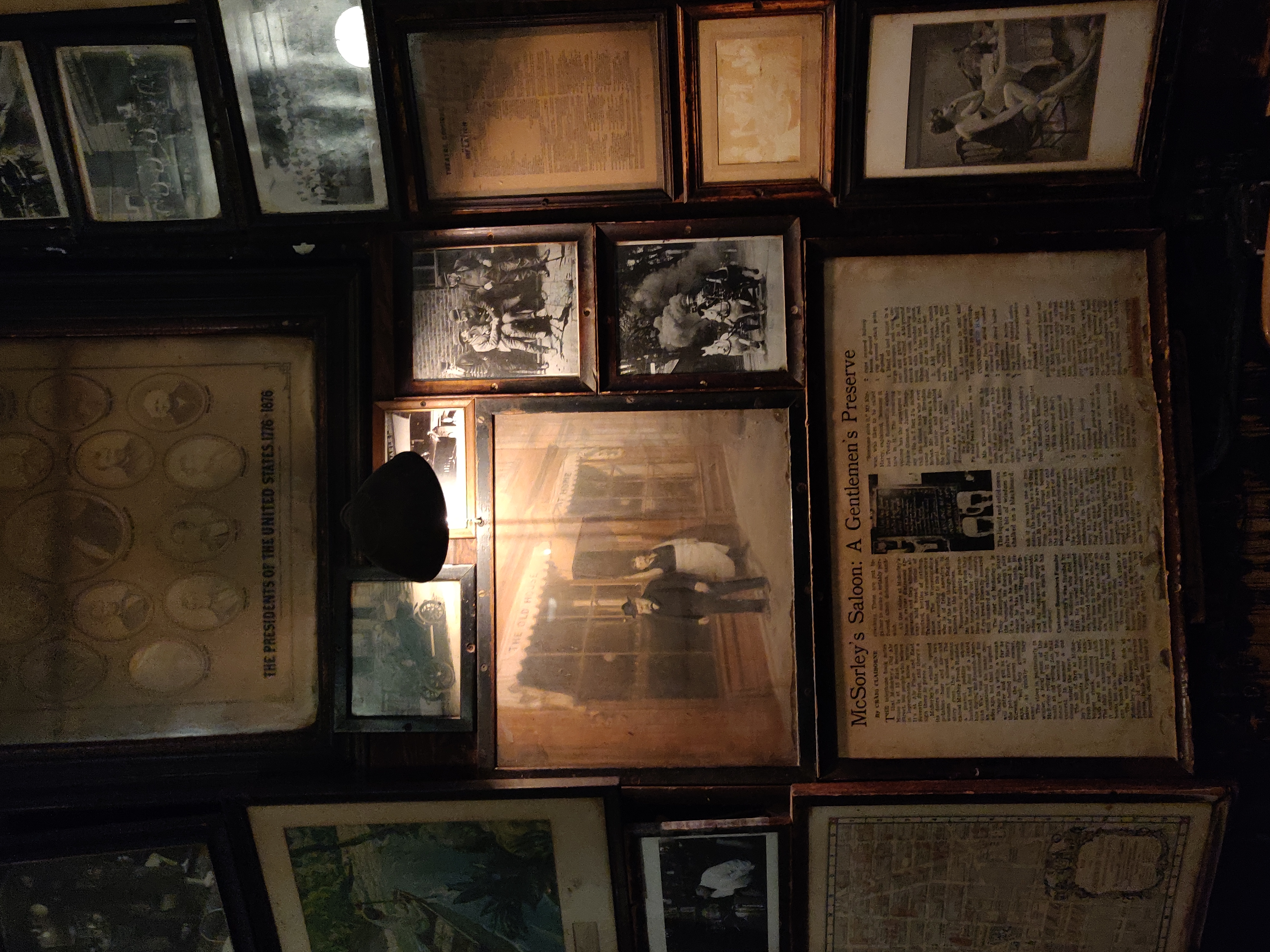
A faded photograph of a football team nobody remembers. A cracked enamel advertising sign. A battered Guinness mirror that has lost its shine. A yellowing newspaper clipping tucked behind the counter.
To an auctioneer, they might be worth a few euro.
To the people who know their story, they are priceless.
Perhaps that's why Ireland has always struggled to throw things away. We don't simply collect objects. We collect memories. The object becomes the anchor for a conversation, a place, or a person who is no longer here.
An old pub stool isn't just somewhere to sit. It might have supported generations of neighbours solving the problems of the world over a pint. A brass bell behind the bar once called regulars in from the yard. A faded race card recalls a legendary day at Leopardstown that someone has retold a hundred times.
The physical item is almost secondary.
It's the story that gives it value.
You see it every day at flea markets and antique fairs. Someone picks up an ordinary looking object and says, "My grandfather had one exactly like that."
Instantly, the object changes. It is no longer just a piece of timber, porcelain or brass. It becomes a doorway back into childhood kitchens, smoky bars, family gatherings and long forgotten conversations.
I once came across an old Guinness ashtray at a market. It was chipped, stained and probably worth very little. Yet the woman who bought it became emotional the moment she saw it. It had sat on the windowsill of her grandfather's pub when she was a child, and seeing it brought back memories she thought she'd forgotten. She wasn't buying an ashtray. She was buying a piece of her own history.
Irish pubs understand this better than anywhere.
The greatest pubs in Ireland were never designed like museums, yet many of them became accidental museums over time. Their walls filled gradually with photographs, sporting trophies, old advertisements, whiskey mirrors, newspaper cuttings and bits of local history that nobody ever intended to preserve. They simply stayed where they were because somebody remembered why they mattered.
Every generation added another layer.
The result is that many of Ireland's finest pubs feel less like businesses and more like living archives.
In an age where so much is digital, disposable and temporary, these objects remind us that history can still be touched.
Perhaps that explains why so many people decorating an Irish pub, home bar or living room search for vintage Irish prints and old advertisements. They are not simply looking for decoration. They are trying to recreate a feeling.
The warmth of a familiar pub.
The memory of a grandparent's house.
A visit home from abroad.
A conversation that lasted until closing time.
Whether it's an old Jameson advertisement, a Guinness mirror, a railway poster or a faded print of Dublin streets long since changed, these pieces help recreate the atmosphere of old Ireland. They remind us that a room is shaped as much by its stories as its furniture.
The object itself may have little monetary value, but the story attached to it can be worth everything.
After twenty years searching markets, auctions and old buildings across Ireland, I've come to believe that the greatest treasures are rarely the rarest or the most expensive.
They're the ones that make someone stop, smile quietly and say,
"I haven't seen one of those in years."
And that may be the greatest value any object can hold. Not its rarity, nor its price, but its ability to transport us instantly to another place and another time.
Long after we're gone, the stories survive because somebody kept the photograph, the mirror, the sign or the old print on the wall.
Perhaps that's why we treasure these things so much in Ireland. They're not simply antiques.
They're memory made visible.
And perhaps that's the greatest treasure of all.
At Rare Irish Stuff, we believe the best pieces of Irish pub decor and vintage Irish prints are more than decoration. They are reminders of the people, places and stories that make Ireland unique.


