When people think of museums, they imagine glass cases, polished floors and signs asking visitors not to touch the exhibits.
The Irish pub could not be more different.
There are no admission tickets, no guided tours and no carefully labelled displays. It smells of polished timber, turf smoke, stout and old history, and every object seems to carry a memory of the people who stood beside it. Instead, the history hangs casually on the walls, sits above the fireplace and gathers dust on shelves behind the bar. It has always been there, quietly becoming part of the furniture until nobody notices it anymore.
After more than twenty years buying the contents of Irish pubs, I've come to realise that the objects people value most are rarely the expensive ones. More often it's the faded photograph, the old brewery mirror, the chipped whiskey jug or the battered advertising sign that nobody could bear to throw away.
Over the years I've visited and bought from pubs all over Ireland, and one thing has always struck me, no two are ever the same. Every wall tells a different story. Every shelf holds objects that arrived there decades ago and simply never left.
I've lost count of the number of times I've walked through an old pub door intending to buy a mirror or a sign, only to spend an hour listening to the stories behind the things hanging on the walls.
In many ways, the Irish pub was always a museum, long before anyone thought of calling it one.
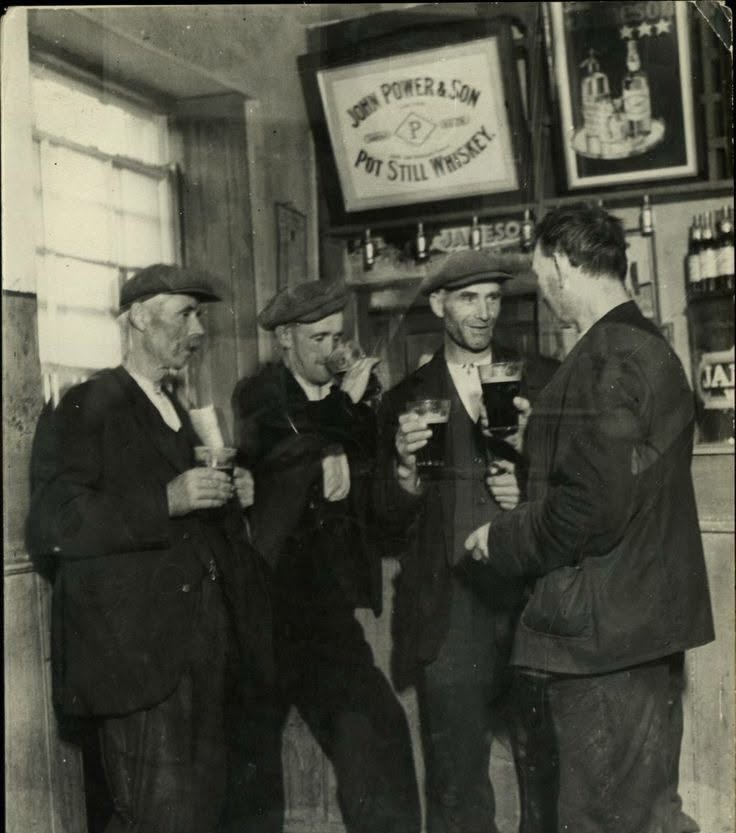
Step inside an old pub and you'll often find brewery mirrors that have reflected generations of conversations, faded advertisements for whiskey and stout, photographs of local football teams, musicians, racehorses and long forgotten celebrations. There are old clocks that no longer keep perfect time, brass measures polished by thousands of hands and handwritten notices that have survived long after the reason for them was forgotten.
None of these objects were collected because they were valuable.
They were kept because they belonged.
Over time they became part of the story of the pub itself.
One of the things I love most about travelling around Ireland is seeing how every pub has built its own collection. The Long Hall in Dublin feels like stepping into Victorian Ireland, its mirrors and mahogany preserved almost exactly as they have stood for generations. Mulligan's on Poolbeg Street is filled with history that seems to seep from every corner. The Gravediggers in Glasnevin still feels wonderfully untouched, while Toner's on Baggot Street carries the atmosphere of countless conversations that have unfolded beneath its old timber and mirrors.
The same tradition travelled wherever the Irish went.
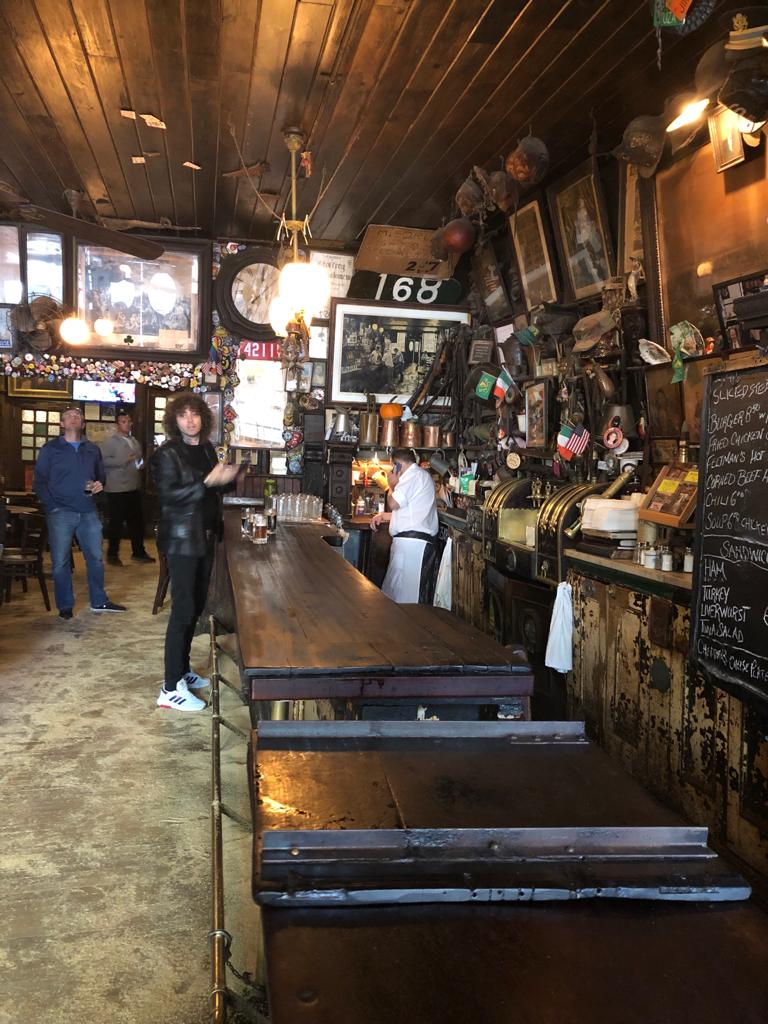
One of the pubs that has always stayed with me is McSorley's Old Ale House in New York. Walking through its doors feels less like entering a bar and more like stepping into a living museum. The walls are crowded with photographs, newspaper clippings, signs and objects collected over generations. Nothing is arranged for tourists. Everything simply belongs, and that is exactly what makes it so special.
I've often thought that wherever the Irish settled, they built more than pubs. They built places that preserved memories. From Dublin to Boston, New York to Melbourne and Sydney, Irish pubs became museums of ordinary life, filled with photographs, mirrors, signs and keepsakes that reminded people where they came from.
Perhaps that is why traditional Irish pubs feel impossible to recreate overnight. They cannot simply be designed by an interior decorator. They evolve slowly over decades as every generation leaves something behind. A photograph. A brewery mirror. A trophy. A newspaper clipping. A musician's instrument. A race card tucked behind a frame. Together they become an archive of everyday Irish life.
The remarkable thing is that none of these objects were ever intended to become history.
A whiskey jug was simply a whiskey jug. A Guinness mirror was just an advertisement. A brass measure was only a working tool behind the bar. A hand painted sign was simply there to sell a product. Time transformed them into artefacts.
Over the years I've bought the contents of pubs all over Ireland, and it's often the smallest, most ordinary objects that owners struggle to part with. Not because they're valuable, but because they carry memories. An old ashtray, a faded photograph or a chipped whiskey jug can mean more to a family than the finest antique in the room.
Perhaps that is why so many people today decorate home bars, restaurants and living spaces with vintage Irish pub decor. They are not simply decorating a room. They are trying to recreate the feeling of stepping into a place where stories have been accumulating for generations.
At Rare Irish Stuff, we believe these objects deserve to be remembered. Through our collection of vintage Irish pub prints, brewery mirrors, historic photographs and reproduction memorabilia, we celebrate the everyday objects that helped shape Ireland's pubs and the communities that gathered inside them.
Perhaps Ireland's greatest museum was never built at all.
Perhaps it was simply the local pub, where history was left hanging on the walls instead of locked behind glass.